Understanding the Neurophysiology of ADHD
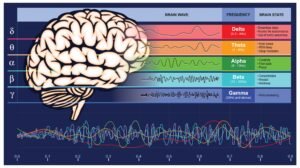
Attention-Deficit/Hyperactivity Disorder (ADHD) is increasingly understood through a neurophysiological lens rather than purely behavioral criteria. One of the most studied biomarkers is the theta-beta ratio (TBR)—a measurable relationship between slow-wave (theta) and fast-wave (beta) brain activity.
- Theta waves (4–8 Hz): Associated with drowsiness, mind-wandering, and reduced alertness
- Beta waves (13–30 Hz): Linked to active thinking, focus, and cognitive control
In many individuals with ADHD, research has identified a higher theta-beta ratio, indicating increased under-arousal and reduced executive control.
According to the National Institutes of Health, EEG-based studies have consistently explored these patterns as part of understanding attention regulation and cortical activation.
What Is Theta-Beta Imbalance?
Theta-beta imbalance refers to a disproportionate increase in theta activity relative to beta activity, particularly in frontal brain regions responsible for attention and impulse control.
This imbalance is associated with:
- Reduced sustained attention
- Increased distractibility
- Slower cognitive processing
- Impaired executive function
Research indexed in PubMed shows that elevated TBR has been observed in subsets of ADHD populations, though it is not universal across all cases.
Strategic insight: ADHD is not a single-pattern condition. Theta-beta imbalance represents one identifiable neurophysiological subtype, reinforcing the need for individualized assessment.
The Role of QEEG in Identifying Imbalance
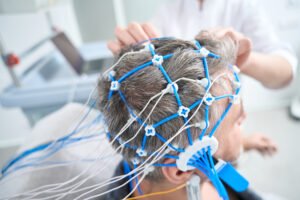
Quantitative EEG (QEEG) provides a structured method to measure and visualize the theta-beta ratio across different brain regions.
Key advantages:
- Objective measurement of brainwave activity
- Comparison against age-matched normative databases
- Identification of regional imbalances, not just global patterns
The National Center for Biotechnology Information highlights that QEEG enhances EEG interpretation by enabling quantitative analysis and pattern recognition.
This transforms ADHD evaluation from symptom-based observation to data-supported neurofunctional mapping.
How Neurofeedback Targets Theta-Beta Imbalance
Neurofeedback is designed to train the brain toward more optimal activity patterns through real-time feedback and reinforcement.
Targeted Mechanism
In cases of elevated theta-beta ratio, neurofeedback protocols typically aim to:
- Reduce excess theta activity (improving alertness)
- Increase beta activity (enhancing focus and cognitive control)
Training Process
- Baseline QEEG Assessment
Establishes the individual’s theta-beta profile - Protocol Customization
Targets specific brain regions (often frontal or central areas) - Feedback-Based Training
Visual or auditory cues reinforce desired brainwave patterns - Adaptive Progression
Protocols adjust based on measurable changes over time
This process supports self-regulation of neural activity, rather than external stimulation.
Evidence and Clinical Perspective
The theta-beta ratio has been one of the most researched EEG markers in ADHD, though its role continues to evolve.
Supporting Evidence
- Early studies demonstrated a correlation between elevated TBR and attentional deficits
- Neurofeedback targeting TBR has shown improvements in attention, impulsivity, and executive function in some trials
Current Consensus
Organizations such as the American Academy of Pediatrics and American Academy of Neurology emphasize:
- ADHD diagnosis remains clinical, not solely EEG-based
- Neurofeedback may be considered a complementary intervention, not a replacement for standard care
Key Considerations
- Not all individuals with ADHD exhibit elevated TBR
- Treatment outcomes vary based on protocol quality and individual neurophysiology
- Ongoing research is refining which subgroups benefit most
Implication: Precision in assessment is essential. QEEG helps determine whether theta-beta imbalance is a relevant target for intervention.
Moving Beyond Symptoms: Addressing the Root Pattern
Traditional ADHD management often focuses on symptom control. In contrast, neurofeedback aims to address underlying neural regulation patterns.
By targeting theta-beta imbalance:
- The brain is trained to achieve more stable activation states
- Cognitive processes such as attention and inhibition become more efficient
- Improvements are based on learned self-regulation, not temporary external effects
This positions neurofeedback as a strategy aligned with functional optimization rather than symptom suppression alone.
Expanding the Model: ADHD Is Not One Pattern
Recent research emphasizes that ADHD includes multiple neurophysiological subtypes, such as:
- Theta-dominant profiles (under-arousal)
- Beta dysregulation profiles (over-arousal or anxiety-linked)
- Connectivity-based irregularities
QEEG enables differentiation between these patterns, ensuring that neurofeedback is appropriately targeted rather than broadly applied.
Strategic Takeaway
Theta-beta imbalance provides a measurable framework for understanding one pathway of attentional dysregulation in ADHD. However, its value lies in how it is used:
- As a data point within a broader clinical context
- As a guide for personalized neurofeedback protocols
- As part of a precision-based approach to cognitive optimization
The future of ADHD care is not defined by a single biomarker, but by the integration of objective brain data with individualized intervention strategies.
References (Selected)
- National Institutes of Health – EEG and ADHD research
- PubMed – Studies on theta-beta ratio and neurofeedback
- National Center for Biotechnology Information – QEEG methodology and applications
- American Academy of Pediatrics – ADHD clinical guidelines
- American Academy of Neurology – Evidence reviews on neurofeedback