Sleep disorders affect millions worldwide, with conditions like insomnia, sleep apnea, and restless leg syndrome leading to poor sleep quality, impaired cognitive function, and decreased overall health. Traditional treatments like medications often come with side effects or fail to address underlying causes. Neurofeedback, a cutting-edge, non-invasive brain training technique, offers a promising solution. Here’s how neurofeedback can help improve sleep and restore your body’s natural rhythm.
What is Neurofeedback?
Neurofeedback is a form of biofeedback that involves training the brain to regulate its own activity. Using real-time EEG (electroencephalogram) readings, neurofeedback provides immediate feedback to the individual about their brainwave patterns. Through this process, individuals can learn to shift their brain activity toward desired states, whether that’s focused attention, relaxation, or improved sleep regulation.
Unlike medication, which acts on the body externally, neurofeedback directly targets the brain’s ability to self-regulate, offering a more natural approach to mental health and wellness.
How Neurofeedback Works for Sleep Disorders
Sleep regulation involves the complex interaction of brainwave activity across various regions. Each stage of sleep (light sleep, deep sleep, REM sleep) requires specific brainwave patterns to occur in a synchronized manner. Neurofeedback can target these patterns, training the brain to move from overactive or irregular states (often associated with insomnia or disrupted sleep) to more balanced and restorative states.
1. Training Brainwaves for Relaxation
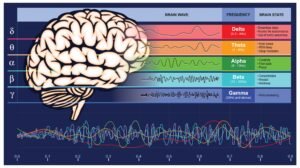
Chronic stress and anxiety are significant contributors to sleep disorders. High beta waves (associated with alertness and anxiety) often dominate the brain at night, preventing relaxation. Neurofeedback helps individuals train their brain to reduce high beta activity and increase alpha and theta waves, which are linked to calmness and relaxation. By promoting these states, the brain can enter a state more conducive to sleep, making it easier to fall asleep and stay asleep.
2. Balancing Sleep Cycle Brainwaves
During sleep, the brain moves through different stages, each requiring distinct brainwave activity. Individuals with sleep disorders often experience imbalanced brainwave patterns, particularly in the transition between sleep stages. Neurofeedback training helps optimize the brain’s ability to transition smoothly between these stages, allowing for deeper, more restorative sleep and improved sleep architecture.
3. Improving Sleep Efficiency
In conditions like insomnia, the brain struggles to maintain deep sleep or move through sleep cycles efficiently. Neurofeedback can retrain the brain to increase sleep efficiency, promoting longer periods of restorative sleep without frequent awakenings. This allows for better overall sleep quality and a more rested feeling upon waking.
Neurofeedback vs. Traditional Sleep Treatments
Traditional treatments for sleep disorders often involve medications, cognitive behavioral therapy (CBT), or sleep hygiene recommendations. While these treatments can be effective, they do not always address the root causes of the problem. Medications may provide temporary relief but can lead to dependency or unwanted side effects. CBT is effective but can take weeks or months to see significant results.
Neurofeedback, on the other hand, offers a more direct, individualized approach that targets the brain’s underlying activity patterns, providing a non-invasive, drug-free option. Results from neurofeedback training can be seen in a relatively short time frame, often within 10-20 sessions.
Benefits of Neurofeedback for Sleep Disorders
Neurofeedback offers several advantages over traditional treatments:
- Non-invasive and Drug-free: No side effects, and no reliance on medication.
- Personalized Treatment: Tailored to the individual’s unique brainwave patterns and sleep challenges.
- Long-term Results: By training the brain to self-regulate, neurofeedback can provide lasting improvements in sleep without the need for ongoing treatment.
- Improved Sleep Quality: Users report better sleep efficiency, deeper sleep, and more restful nights.
- No Need for Pills: Unlike sleeping medications, which only mask symptoms, neurofeedback helps address the root cause of sleep issues.
Who Can Benefit from Neurofeedback for Sleep Disorders?
Neurofeedback is beneficial for a wide range of sleep disorders, including:
- Insomnia: Difficulty falling asleep or staying asleep due to overactive brainwave patterns.
- Sleep Apnea: Although primarily a physical condition, neurofeedback can help improve the brain’s response to breathing interruptions during sleep.
- Restless Leg Syndrome (RLS): By calming the nervous system, neurofeedback can reduce the discomfort that often leads to RLS symptoms at night.
- Chronic Stress-Induced Sleep Disturbances: For those whose sleep is frequently interrupted by stress or anxiety, neurofeedback helps calm the nervous system.
What to Expect from Neurofeedback for Sleep Treatment
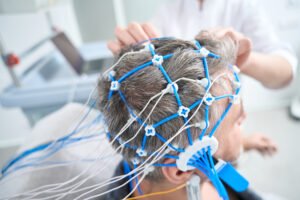
Neurofeedback sessions typically last between 30-45 minutes and are held 1-2 times per week. During a session, the individual’s brainwave activity is monitored through electrodes placed on the scalp. The neurofeedback therapist provides real-time feedback to guide the person toward more optimal brainwave patterns.
As the brain learns to regulate its activity, clients often notice gradual improvements in their ability to relax, fall asleep faster, and maintain deep sleep. While the number of sessions required varies, many individuals report significant improvement after 10-20 sessions, with continued benefits over time.
Conclusion: A Revolutionary Approach to Sleep Wellness
Neurofeedback offers a cutting-edge, natural, and effective solution for individuals struggling with sleep disorders. By targeting the brain’s neural activity, neurofeedback helps restore balance and optimize sleep regulation, providing long-term benefits without the reliance on medication. If you are struggling with sleep and seeking an alternative to traditional treatments, neurofeedback could be the key to unlocking your best night’s rest.
At Optimum Peak Wellness, we offer neurofeedback training as part of our holistic approach to wellness, helping individuals achieve sustainable sleep improvements and enhanced overall health.